Compare Live Mortgage & Home Equity Rates
Compare current APRs, points, fees, and estimated monthly payments from participating lenders below.
Mortgage rates
Understanding Low Credit Refinancing After Recent Issues
Quick Answer: A low credit refi after recent issues involves replacing your current loan with a new one, even if you've faced financial setbacks like missed payments or a credit score drop. Lenders may consider factors such as minimum credit scores, income stability, and home equity. Programs like FHA Streamline Refinance can help eligible borrowers refinance with minimal documentation.
If you've had recent financial hiccups and are exploring refinancing options with low credit, you're not alone. Refinancing could help improve your financial situation by potentially lowering payments or securing better terms. In this guide, we’ll outline the steps, eligibility requirements, program options, common obstacles, and actionable strategies to help you navigate this process confidently, especially when considering a low credit refi after recent issues.
What Is Low Credit Refinancing and How Does It Work?
Refinancing involves replacing your current loan with a new one, ideally with better terms. Individuals with low credit scores often face higher interest rates or stricter requirements, but it is possible to refinance even after encountering financial challenges such as missed payments, a drop in credit score, or other financial setbacks. A low credit refi after recent issues can be a viable option for many borrowers.
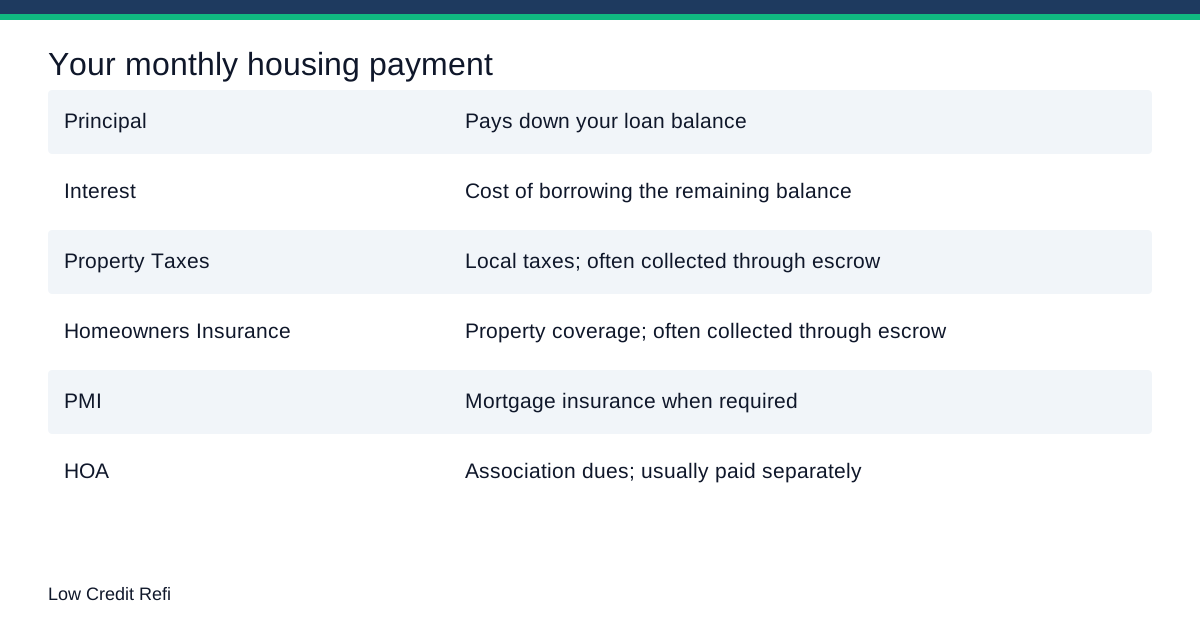
Low credit refinancing typically focuses on adjusting your loan to make payments more manageable or reduce financial strain. While lenders may view low credit as a risk, many programs exist to help borrowers recover and regain stability. For instance, refinancing could allow you to switch from an adjustable-rate mortgage (ARM) to a fixed-rate mortgage, ensuring predictable monthly payments.
Who Is Eligible for a Low Credit Refi After Recent Issues?
Eligibility criteria for refinancing with low credit can vary depending on the lender or program. Below are common factors lenders assess when considering a low credit refi after recent issues:
Minimum Credit Score
Most lenders prefer a minimum credit score of 580 to 620 for refinancing with less-than-perfect credit. However, some programs, such as FHA loans, are designed specifically for borrowers with lower scores. If your score is below this threshold, consider improving your credit before applying for a low credit refi after recent issues.
This is especially relevant for those interested in affordable low credit refi after recent issues.
Employment and Income Stability
Lenders will review your sources of income to ensure you can afford the new loan. Demonstrating consistent earnings or providing proof of steady employment can significantly improve your eligibility for a low credit refi after recent issues. For self-employed borrowers, tax returns and profit-and-loss statements may be required.
Home Equity
Home equity refers to the portion of your property’s value that you own outright. If your loan-to-value (LTV) ratio meets the lender's guidelines (often below 80-90%), you may qualify for a low credit refi after recent issues. For example, if your home is worth $250,000 and you owe $200,000, your equity is $50,000 (20%).
Financial History
Lenders may examine your financial history to determine how recent issues, such as late payments or defaults, are being managed. Providing documentation that demonstrates resolution or steps toward improvement—like a payment plan—can strengthen your case for a low credit refi after recent issues.
Lending Programs for Low Credit Refi After Recent Issues
Dispute credit report errors with evidence
Review reports from all three credit bureaus and dispute inaccurate information with supporting documents. Accurate negative information cannot legally be removed simply because it is unfavorable; no score increase is guaranteed.
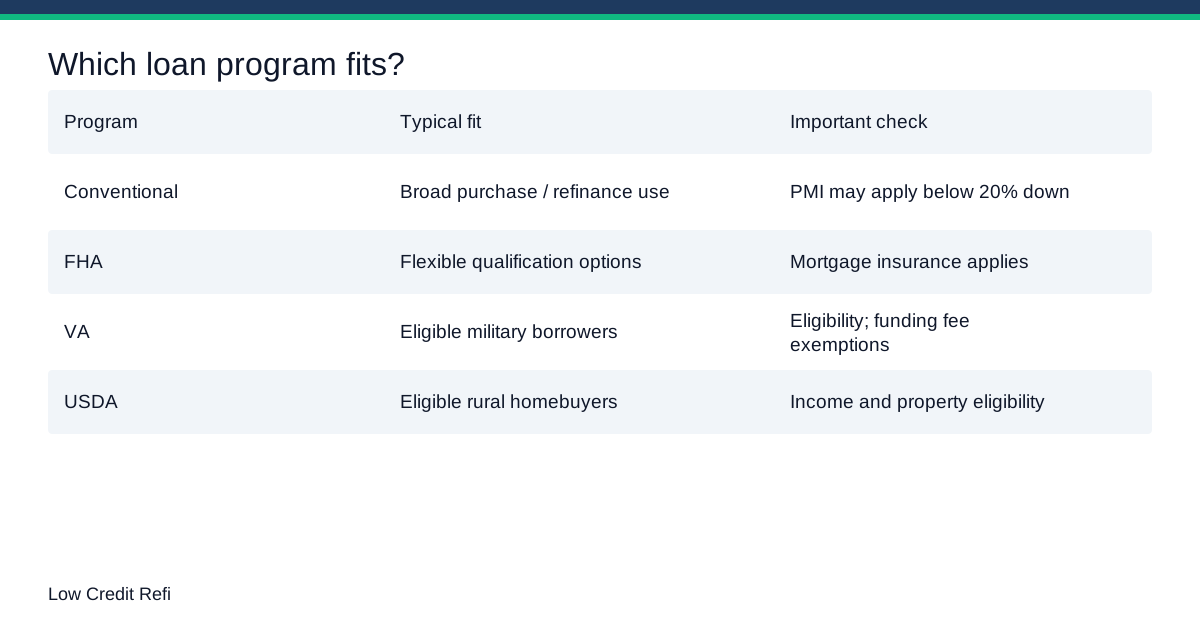
Depending on your circumstances, you may explore one of these options for a low credit refi after recent issues:
FHA Streamline Refinance
- Pros: Requires minimal paperwork, allows refinancing without a credit check or appraisal.
- Cons: Only available for current FHA borrowers; mortgage insurance premiums apply.
VA Interest Rate Reduction Refinance Loan (IRRRL)
- Pros: Exclusively available to veterans; flexible approval criteria.
- Cons: Must meet VA-specific eligibility requirements.
Non-QM Loans (Non-Qualified Mortgage)
- Pros: Designed for borrowers outside conventional lending guidelines with flexible terms.
- Cons: Typically feature higher interest rates.
Private Lenders
Private lenders or credit unions often offer tailored refinancing solutions for borrowers with suboptimal credit. While their terms may vary, they often provide more personalized options compared to traditional banks, making them a good choice for a low credit refi after recent issues.
Common Obstacles and How to Overcome Them
Navigating a refinance with low credit may feel intimidating, but preparation can help you overcome common challenges:
High Interest Rates
Borrowers with low credit may face higher interest rates, which can offset refinancing benefits. Solution: Improve your credit score before refinancing by paying down debts, correcting errors on your credit report, and limiting new accounts. Alternatively, negotiate with lenders for better terms when seeking a low credit refi after recent issues.
Difficulty Finding Lenders
Not all lenders offer refinancing options for borrowers with blemished credit histories. Solution: Research specialized programs like FHA or VA options, or consult independent brokers who can connect you with suitable lenders for a low credit refi after recent issues.
Debt-to-Income Ratio (DTI) Too High
A high DTI ratio can signal to lenders that refinancing may not be manageable. Solution: Reduce outstanding debts or increase your income before applying for a low credit refi after recent issues. For example, paying off credit cards or consolidating debt could lower your DTI ratio.
Checklist for Low Credit Refinancing
Use this practical checklist to streamline your preparation process for a low credit refi after recent issues:
- Review your credit report for errors and resolve discrepancies.
- Calculate your loan-to-value (LTV) ratio to estimate equity.
- Gather all necessary financial documentation (proof of income, banking statements, tax returns).
- Research lending options and specialized programs for borrowers with low credit.
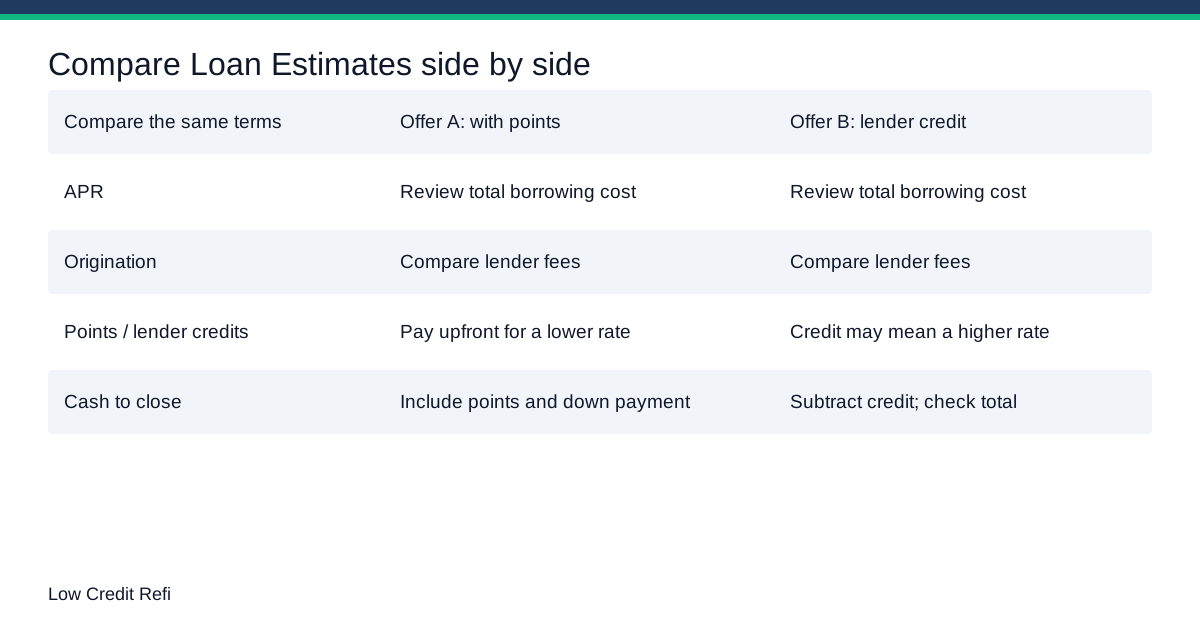
- Compare interest rates and terms from multiple lenders.
- Budget for potential fees, including closing costs and appraisal charges.
Practical Steps to Secure a Low Credit Refinancing
Follow these actionable steps to improve your chances of success with a low credit refi after recent issues:
- Assess Your Current Loan: Identify areas where refinancing could benefit you, such as reducing monthly payments or switching to a fixed rate.
- Boost Your Credit Score: Make consistent payments on overdue accounts, maintain low credit utilization, and avoid applying for new credit.
- Shop for Lenders: Use online comparison tools or work with brokers who specialize in low-credit refinancing options.
- Prepare Documentation: Ensure all financial documents, including tax returns, bank statements, and proof of income, are readily available.
- Submit Applications Strategically: Apply to multiple lenders within a short timeframe to limit credit score impact and secure competitive offers for a low credit refi after recent issues.
Your Next Steps
Navigating refinancing with low credit after recent issues can be challenging but manageable. Take time to improve your financial standing, explore tailored programs, and consult credible lenders to identify options that suit you. A low credit refi after recent issues could be a step toward financial recovery and long-term stability.
Ready to Explore Your Options?
If you’re looking to refinance and need guidance, start with lenders specializing in low credit solutions. Remember, researching eligibility and preparing your finances can increase your chances of securing favorable terms for a low credit refi after recent issues. Take small, actionable steps today to regain control of your financial future.
Disclaimer
This article is for informational purposes only and does not constitute financial or legal advice. Always consult a qualified financial advisor before making refinancing decisions.
Key Takeaways
- Understanding your options for low credit refi after recent issues is the first step
- Explore related options like low credit refi
- Explore related options like after recent issues
- Getting pre-qualified helps you understand your real options