Introduction to Terms and Conditions
Quick Answer: Terms and conditions for low credit refinance programs outline eligibility criteria, interest rate structures, fees, and loan terms. Reviewing them helps you understand requirements like credit score thresholds, income verification, and penalties, ensuring you choose a program suited to your financial situation.
Understanding the terms and conditions associated with low credit refinance programs is essential for making informed financial decisions. This page outlines the critical details, eligibility requirements, and guidance to navigate these options confidently. Whether you’re seeking better loan terms or a more manageable payment plan, familiarizing yourself with these rules is a crucial first step.
What Are Terms and Conditions?
Terms and conditions are the rules and regulations that govern financial agreements. When it comes to low credit refinance programs, these typically include:
- Eligibility Criteria: Requirements such as credit score thresholds, income verification, and employment history.
- Interest Rate Structures: Fixed or adjustable rates that impact monthly payments.
- Fees and Penalties: Costs for late payments or early loan termination.
- Loan Terms: Specific details about repayment periods and contractual obligations.
Eligibility for Low Credit Refinance Programs
Refinancing with a low credit score can feel daunting, but most lenders have specific eligibility requirements. Knowing these requirements can help you prepare before applying.
Common Eligibility Criteria:
- Credit Score Bracket: While requirements vary, many programs accept scores starting at 500. However, borrowers with higher scores often qualify for better interest rates.
- Income Verification: Lenders typically require proof of stable income, such as pay stubs or tax returns, to demonstrate your ability to make monthly payments.
- Loan-to-Value Ratio (LTV): Lenders may also assess the ratio of your loan balance to your property’s value. Most programs require an LTV below 80%.
- Employment Stability: A consistent employment history, often two years or more, can improve your chances of approval.
Additional Tips to Boost Eligibility:
- Consolidate Debt: Reducing your overall debt can lower your debt-to-income ratio, making you a more attractive borrower.
- Credit Repair: Spend time improving your credit score by paying off overdue balances or disputing errors on your credit report.
- Consider a Co-Signer: A co-signer with strong credit can help you qualify for better terms.
Low Credit Refi Program Options
Fixed-Rate Refinance
A fixed-rate refinance offers predictable monthly payments over the loan term. This option is ideal for borrowers who prefer stability and a consistent budget.
Pros:
- A stable interest rate that doesn’t change.
- Simplified budgeting due to fixed payments.
- Higher interest rates for borrowers with low credit scores.
- May require upfront fees.
Adjustable-Rate Mortgage (ARM) Refinance
This is especially relevant for those interested in best terms and conditions.
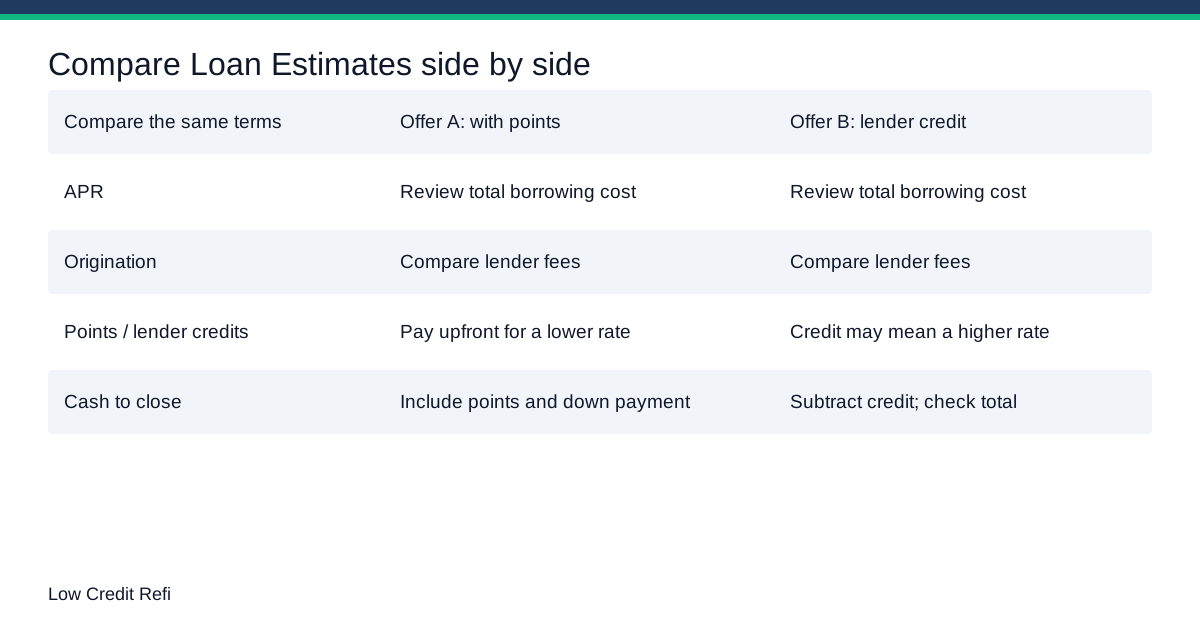
This option features an initially low interest rate that adjusts after a set period based on market conditions. It’s a suitable choice for borrowers planning to refinance again or move within a few years.
Pros:
- Lower initial payments compared to fixed-rate loans.
- Flexibility for short-term plans.
- Payments may increase unpredictably after the introductory period.
- Rates are tied to market fluctuations.
Government-Backed Programs
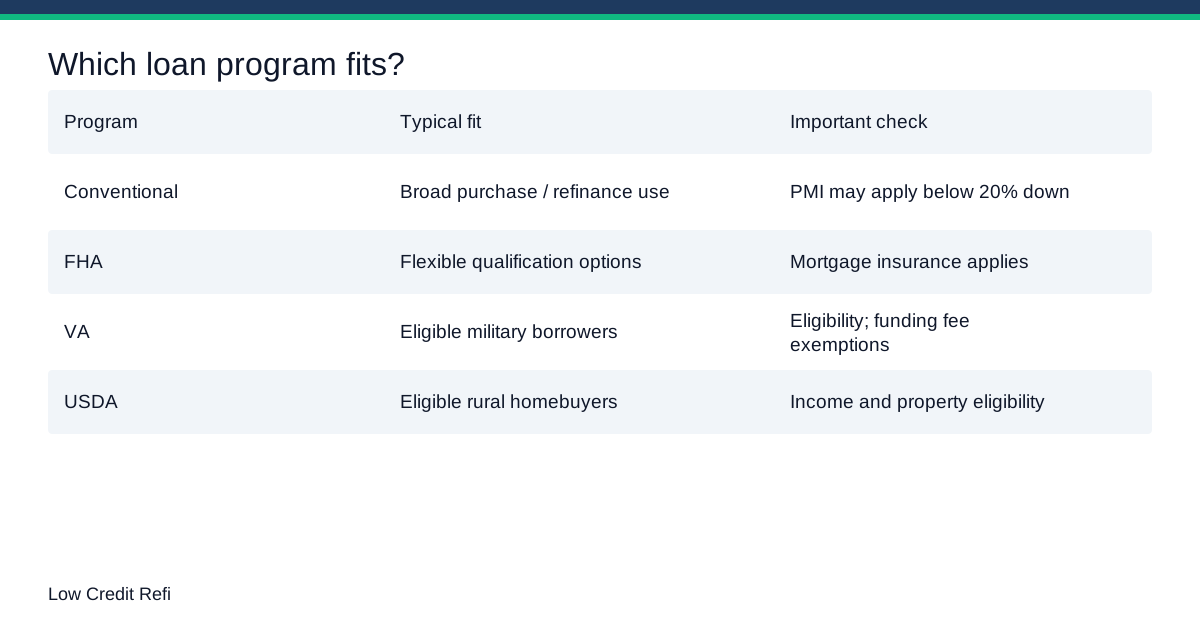
Federal programs like FHA streamline refinance options can help borrowers with low credit scores qualify for better mortgage terms.
Dispute credit report errors with evidence
Review reports from all three credit bureaus and dispute inaccurate information with supporting documents. Accurate negative information cannot legally be removed simply because it is unfavorable; no score increase is guaranteed.
People looking into terms conditions will find this information valuable.
Pros:
- Relaxed credit requirements compared to conventional loans.
- Lower upfront costs, including reduced down payments.
- Additional insurance premiums may apply.
- Limited to FHA loans only.
Common Obstacles and Solutions
Navigating terms and conditions often comes with challenges, but proactive strategies can help you overcome them.
Poor Credit History
Solution:
- Add a co-signer with good credit to strengthen your application.
- Demonstrate on-time payments for other loans or credit cards over the last 12 months.
High Interest Rates
Solution:
- Compare offers from multiple lenders to find competitive rates.
- Look into government-backed options, which often feature lower interest rates for low credit borrowers.
Insufficient Home Equity
Solution:
- Explore alternative financing methods, such as personal loans or home equity lines of credit (HELOCs).
- Consider waiting until your property value increases or paying down your existing loan balance.
Checklist for Refinancing Success
Being prepared can streamline the refinancing process and help you secure favorable terms.
Before Applying:
- Review Your Credit Report: Check for inaccuracies and dispute any errors.
- Strengthen Your Financial Profile: Pay down debt to improve your debt-to-income ratio.
- Organize Your Financial Documents: Gather pay stubs, tax returns, bank statements, and employment records.
- Research Lenders: Use comparison tools to identify lenders that specialize in low credit refinance programs.
During the Process:
- Ask Questions: Clarify terms and conditions, including fees and penalties.
- Compare Offers: Evaluate multiple quotes to find the best balance of interest rates and fees.
- Stay Proactive: Respond promptly to lender requests to avoid delays.
Final Approval:
- Read the Fine Print: Verify all terms and conditions before signing.
- Be Confident: Ensure the program aligns with your financial goals.
Next Steps
If you’re ready to explore refinancing options, start by contacting multiple lenders for personalized quotes. Be sure to consider all associated fees and compare programs carefully. Researching terms and conditions upfront will empower you to make confident decisions.
Call to Action (CTA):
Are you unsure where to begin? Contact us today for expert guidance on navigating low-credit refinance opportunities. Our team is here to help you every step of the way.
Disclaimer
This content is for informational purposes only and does not constitute financial advice. Always consult with a licensed financial advisor or mortgage specialist before making refinancing decisions. Individual program terms and conditions may vary based on lender policies.
Frequently Asked Questions
What are typical eligibility requirements for low credit refinance programs?
Common eligibility criteria include a minimum credit score (often starting around 500), proof of stable income, a loan-to-value ratio below 80%, and consistent employment history. Meeting these requirements can improve your chances of approval.
How do fixed-rate and adjustable-rate refinance options differ?
A fixed-rate refinance offers a stable interest rate and predictable monthly payments, ideal for budgeting. An adjustable-rate mortgage (ARM) starts with a lower rate that can change over time, potentially increasing payments. Your choice depends on your preference for stability versus initial savings.
What fees and penalties should I look for in refinance terms?
Terms may include origination fees, application fees, and penalties for late payments or early loan termination. Reviewing these costs helps you avoid unexpected charges and choose a program with manageable fees.
Can I improve my eligibility for a low credit refinance?
Yes, you can boost eligibility by consolidating debt to lower your debt-to-income ratio, repairing your credit by paying off overdue balances or disputing errors, or considering a co-signer with strong credit. Prequalification tools can help you explore options without affecting your credit score.
Key Takeaways
- Understanding your options for terms and conditions is the first step
- Explore related options like terms and conditions
- Explore related options like terms and
- Getting pre-qualified helps you understand your real options