Compare Live Mortgage & Home Equity Rates
Compare current APRs, points, fees, and estimated monthly payments from participating lenders below.
Mortgage rates
What Is Low Credit Refi for First-Time Buyers?
Quick Answer: A low credit refi for first-time buyers allows homeowners with less-than-perfect credit to refinance their mortgage, potentially lowering monthly payments or securing better terms. Programs like FHA refinancing may accept credit scores as low as 500, making it accessible for those who initially bought with a low score.
If you're a first-time homebuyer with a low credit score, you may feel like refinancing is out of reach. Fortunately, there are loan programs and refinancing options specifically designed to assist individuals with imperfect credit histories. A low credit refi for first-time buyers allows first-time buyers to refinance their mortgage, potentially lowering monthly payments, securing better interest rates, or even accessing equity in their home. This guide provides a detailed overview of eligibility requirements, common challenges, and actionable steps to help you navigate the process confidently.
Why Consider Low Credit Refi as a First-Time Buyer?
Refinancing a home loan with a low credit score can feel overwhelming, but the potential financial benefits make it worth exploring. For first-time buyers, refinancing can:
- Lower Monthly Payments: Refinancing to a lower interest rate or extending the loan term can reduce your monthly mortgage payment, providing more breathing room in your budget.
- Secure Better Interest Rates: If market interest rates have decreased or your financial situation has improved since you first obtained your mortgage, refinancing could help you lock in a more favorable rate.
- Access Home Equity: A cash-out refinance allows you to tap into your home’s equity, which can be used for home improvements, paying off high-interest debt, or covering other large expenses.
Eligibility Requirements for Low Credit Refi
Not all refinancing programs are created equal, and eligibility requirements can vary depending on the lender and program. Below are the key factors most lenders consider:
Minimum Credit Score
While conventional loans often require a credit score of at least 620, some government-backed programs, like FHA loans, are more flexible. FHA refinancing options may accept scores as low as 500, provided you meet other financial qualifications, such as a larger equity stake in the property. This flexibility is especially beneficial for those seeking a low credit refi for first-time buyers.Loan-to-Value (LTV) Ratio
Your LTV ratio measures how much of your home’s value is still tied to your mortgage balance. A lower LTV ratio (ideally below 80%) makes you less risky to lenders. For example, if your home is worth $200,000 and your remaining loan balance is $150,000, your LTV ratio is 75%, which could make refinancing easier, including for those looking for a low credit refi for first-time buyers.Debt-to-Income (DTI) Ratio
Lenders also assess your DTI ratio, which compares your monthly debt payments to your gross monthly income. A DTI ratio below 43% is generally preferred, though some programs may allow higher ratios for borrowers with compensating factors, such as a strong employment history. This is an important consideration for anyone pursuing a low credit refi for first-time buyers.Stable Income
Proof of steady income is critical when applying for a refinance. Be prepared to provide documents such as:- Recent pay stubs
- Tax returns for the past two years
- W-2 forms or 1099s for self-employed individuals
Popular Low Credit Refi Programs
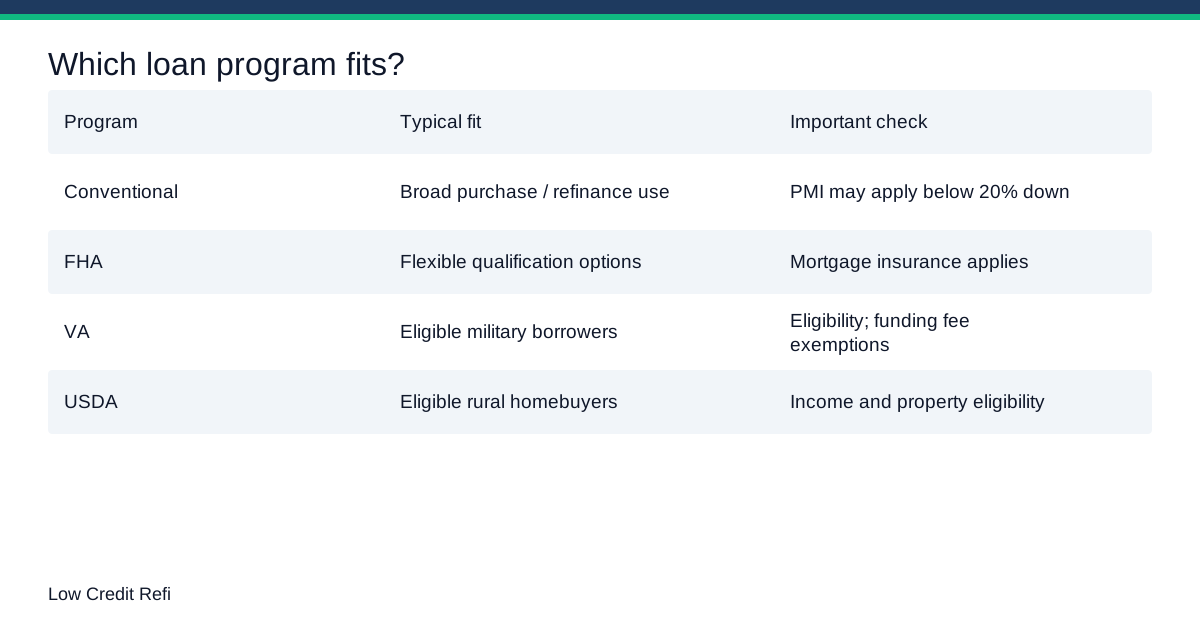
If you have low credit, you'll want to explore specialized refinancing programs that cater to your financial situation. Here are three options worth considering:
FHA Streamline Refinance
The FHA Streamline Refinance program is ideal for current FHA loan holders who want to refinance with minimal hassle.Pros:
- No credit check required in some cases
- No home appraisal needed
- Lower upfront costs
Cons:
- Restricted to FHA loans
- Requires ongoing payment of private mortgage insurance (PMI)
VA Interest Rate Reduction Refinance Loan (IRRRL)
If you're a veteran or active-duty service member, the VA IRRRL program provides a streamlined refinancing option.Pros:
- No minimum credit score requirement
- Reduced closing costs and fees
Cons:
- Only available to eligible military personnel
- Limited cash-out options
Non-QM (Non-Qualified Mortgage) Refinance Loans
For borrowers who don’t meet traditional lending standards, Non-QM loans offer flexible qualification requirements.Pros:
- Lenient credit score thresholds
- Ability to refinance even with significant credit issues
Cons:
- Higher interest rates compared to conventional loans
- May require larger down payments or equity
Overcoming Common Obstacles
Refinancing with low credit often comes with challenges, but they’re not insurmountable. Below are common obstacles and strategies to address them:
This is especially relevant for those interested in affordable low credit refi for first-time buyers.
Problem: Low Appraisal Value
- Solution: Increase your home’s value through minor renovations, such as fresh paint, landscaping, or energy-efficient upgrades.
Problem: High Debt-to-Income Ratio
- Solution: Pay down credit card balances or consolidate loans to reduce your monthly debt obligations. Alternatively, consider applying for a refinance with a co-borrower to improve your DTI ratio.
Problem: Limited Knowledge About Programs
- Solution: Research government-backed programs, consult housing counselors, or speak with lenders who specialize in low credit refinancing, especially those offering a low credit refi for first-time buyers.
Practical Checklist: Steps to Get Started
Ready to take the next step? Follow this checklist to streamline your refinancing journey:
Step 1: Check Your Credit Score
- Obtain a free credit report from AnnualCreditReport.com.
- Dispute inaccuracies and take steps to improve your credit score, such as paying off overdue accounts.
Step 2: Research Lenders
- Look for lenders experienced with low credit borrowers. Compare their terms, rates, and customer reviews before making a decision, particularly those who provide low credit refi for first-time buyers.
Step 3: Organize Your Documents
- Gather essential paperwork, including:
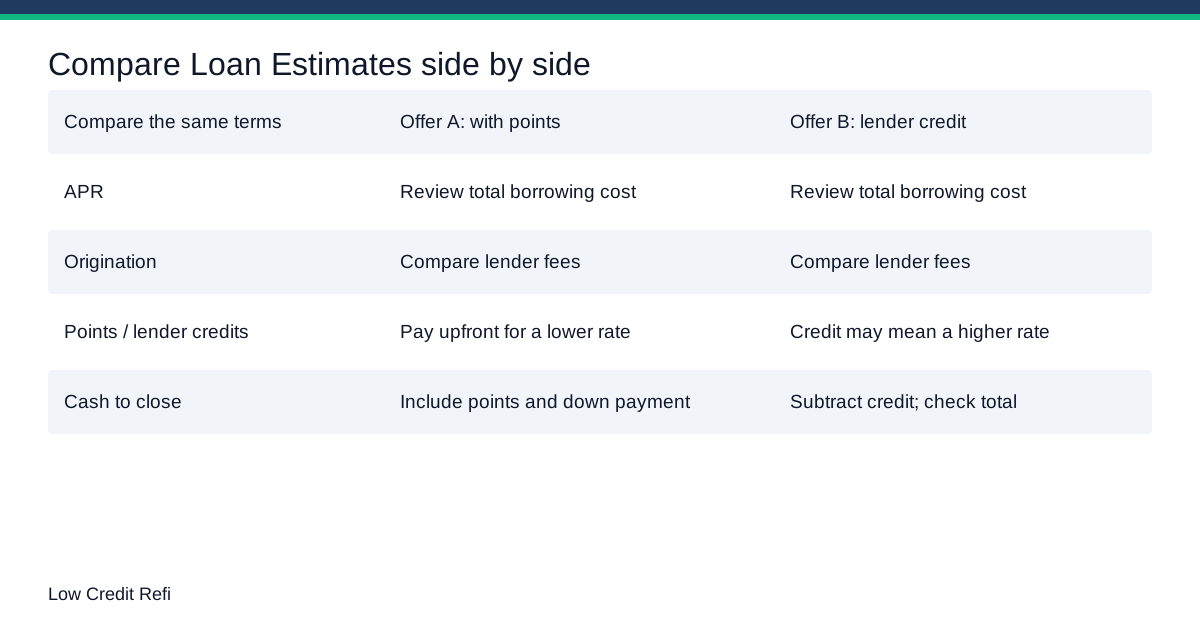
Step 4: Compare Loan Offers
- Request quotes from multiple lenders to ensure you’re getting the best possible terms. Pay attention to interest rates, closing costs, and loan terms, especially for a low credit refi for first-time buyers.
Step 5: Apply for Refinancing
- Submit your application, ensuring all documents are accurate and complete. Missing information may delay the process.
Step 6: Prepare for Closing
- Review the final loan agreement carefully before signing. Once you close, your new loan terms will take effect.
Ready to Refinance? Take the Next Step
A low credit refi for first-time buyers is achievable with the right preparation and resources. By exploring specialized programs and understanding the eligibility criteria, you can secure better financial terms and improve your long-term stability. If you’re ready to start, reach out to a financial advisor or a trusted lender who can guide you through the process and help you find the best low credit refi for first-time buyers options available today.
Disclaimer
This article is for informational purposes only and should not be considered financial advice. Always consult a qualified financial professional before making major financial decisions.Frequently Asked Questions
What credit score do I need for a low credit refi as a first-time buyer?
Requirements vary by lender and program. Government-backed options like FHA loans may accept scores as low as 500, while conventional loans typically require at least 620. Lenders also consider your debt-to-income ratio and loan-to-value ratio, so a lower score may still qualify if other factors are strong.
Dispute credit report errors with evidence
Review reports from all three credit bureaus and dispute inaccurate information with supporting documents. Accurate negative information cannot legally be removed simply because it is unfavorable; no score increase is guaranteed.
People looking into credit firsttime will find this information valuable.
Can I refinance with a low credit score if I have little equity?
Yes, but options may be limited. FHA streamline refinancing does not require an appraisal, so equity is less of a factor. For other programs, a lower loan-to-value ratio (ideally below 80%) improves your chances. Some lenders offer low-equity refinance options for borrowers with compensating factors like stable income.
What documents do I need to apply for a low credit refi?
Lenders typically require recent pay stubs, tax returns for the past two years, W-2 forms or 1099s, bank statements, and proof of homeowners insurance. Self-employed borrowers may need additional documentation like profit and loss statements. Having these ready can speed up the process.
How does a low credit refi affect my monthly payments?
Refinancing can lower your monthly payment if you secure a lower interest rate or extend your loan term. However, if you have a low credit score, the interest rate offered may be higher than for borrowers with excellent credit. It's important to compare offers and consider closing costs to ensure the savings outweigh the expenses.
Key Takeaways
- Understanding your options for low credit refi for first-time buyers is the first step
- Explore related options like low credit refi
- Explore related options like for first-time buyers
- Getting pre-qualified helps you understand your real options