Compare Live Mortgage & Home Equity Rates
Compare current APRs, points, fees, and estimated monthly payments from participating lenders below.
Mortgage rates
Top 10 Tips for Low Credit Refi
Quick Answer: Low credit refinancing involves replacing your existing loan with a new one that may offer better terms, even with a lower credit score. Key tips include checking your credit report, shopping around for lenders, considering a co-signer, and exploring government-backed programs like FHA Streamline. These strategies can help improve your chances of approval and secure more favorable rates.
Refinancing a loan with low credit can feel overwhelming, but it's not impossible. With the right strategies and information, you can take steps to improve your chances and secure a better deal. This guide provides actionable tips and expert insights into low credit refinancing, including the top 10 tips for low credit refi, to help you make confident decisions.
What Is Low Credit Refinancing?
Low credit refinancing involves replacing your existing loan with a new one that may offer better terms or lower interest rates, specifically tailored to borrowers with low credit scores. Although lenders typically favor applicants with higher credit, there are refinancing options available for individuals with less-than-perfect credit, which is why understanding the top 10 tips for low credit refi is crucial.
Eligibility Requirements for Low Credit Refi
While requirements vary by lender, borrowers typically need the following:
- A minimum credit score: Most lenders require a score of 580 or higher, although some may work with lower scores.
- Proof of stable income: Lenders want assurance that you can repay the loan.
- Equity in the property or asset: Having at least 20% equity is ideal for improving your approval chances.
Top 10 Tips for Low Credit Refi
1. Check and Improve Your Credit Score
Your credit score is one of the most critical factors in determining your refinancing terms. Start by requesting a free copy of your credit report from AnnualCreditReport.com. Review it for errors, such as incorrect account balances or late payment reports, and dispute inaccuracies to potentially boost your score.
- Actionable Step: Pay down high-interest debt to improve your credit utilization ratio, which accounts for 30% of your credit score.
- Fact: According to Experian, reducing your credit utilization below 30% can significantly impact your credit score, making it one of the top 10 tips for low credit refi.
2. Shop Around for Lenders
Not all lenders treat low-credit borrowers the same. Some specialize in working with borrowers who have poor credit. Compare rates and terms from banks, credit unions, and online lenders to find the best deal.
This is especially relevant for those interested in guide to top 10 tips for low credit refi.
- Pro Tip: Use pre-qualification tools to check potential offers without affecting your credit score.
- Example: Many online lenders offer soft credit checks during pre-qualification, allowing you to explore rates risk-free, which is essential when following the top 10 tips for low credit refi.
3. Consider a Co-Signer
A co-signer with a strong credit history can improve your chances of approval and help secure a more favorable interest rate. This strategy works particularly well if the co-signer has a high income and excellent credit.
- Important Note: The co-signer shares legal responsibility for the loan, so ensure they understand the risks associated with your refinancing, especially when considering the top 10 tips for low credit refi.
4. Look for Government-Backed Programs
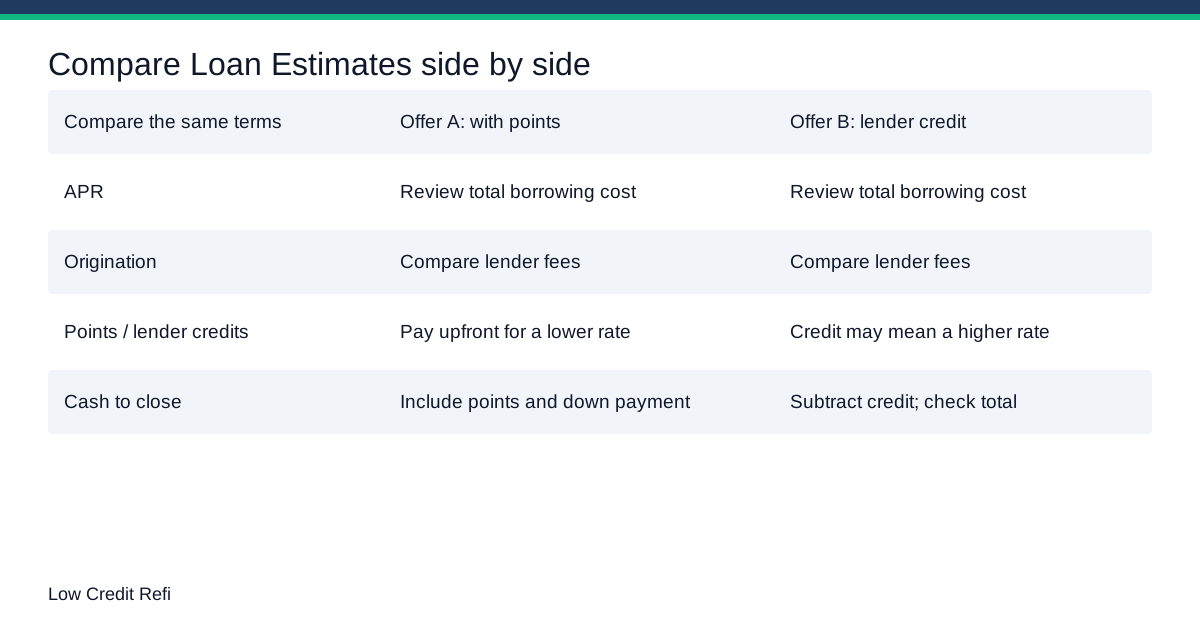
Certain government programs cater to borrowers with lower credit scores. For example:
- FHA Streamline Refinancing: Available for current FHA loan borrowers, this program often has no credit score requirement.
- VA Loans: If you’re a veteran or active-duty service member, VA refinancing options may offer competitive rates with more lenient credit requirements.
- Resource: Visit HUD.gov for more information about FHA loans and how they fit into the top 10 tips for low credit refi.
5. Build Equity Before Refinancing
The more equity you have in your property, the stronger your application will appear to lenders. If your equity is below 20%, consider paying extra toward your current loan to increase it.
Dispute credit report errors with evidence
Review reports from all three credit bureaus and dispute inaccurate information with supporting documents. Accurate negative information cannot legally be removed simply because it is unfavorable; no score increase is guaranteed.
- Example: Making biweekly mortgage payments instead of monthly can help you build equity faster.
- Tip: Use an online equity calculator to estimate your property’s current equity, which is an important aspect of the top 10 tips for low credit refi.
6. Be Realistic About Interest Rates
With low credit, you may not qualify for the lowest rates. However, that doesn’t mean you can’t find a reasonable offer. Focus on finding a loan with rates and terms that align with your budget and financial goals.
- Key Insight: Fixed-rate loans may offer more stability than adjustable-rate loans, especially if interest rates are expected to rise, which is a critical point in the top 10 tips for low credit refi.
7. Prepare Documentation in Advance
Being organized can speed up the refinancing process. Lenders typically request the following documents:
- Recent pay stubs
- Tax returns for the past two years
- Bank statements
- Proof of other income sources (e.g., rental income)
8. Beware of Predatory Lenders
Unfortunately, some lenders target low-credit borrowers with high fees and unfavorable terms. Be cautious of offers that seem too good to be true and always read the fine print.
- Red Flags Include:
- Tip: Research lender reviews online or consult with a trusted financial advisor before proceeding, which aligns with the top 10 tips for low credit refi.
9. Consider Refinancing Alternatives
If refinancing isn’t feasible, explore other options that may provide financial relief:
- Loan Modification: Work with your current lender to adjust your loan terms.
- Debt Consolidation Loans: Combine multiple debts into one loan with a lower interest rate.
- Short-Term Personal Loans: These can help bridge temporary financial gaps but should be used cautiously.
- Ask Yourself: Does refinancing align with my long-term financial goals? This question is vital when considering the top 10 tips for low credit refi.
10. Work with a Trusted Financial Advisor
Navigating the refinancing process can be complex, especially with low credit. A financial advisor can analyze your financial situation and recommend strategies tailored to your needs.
- Benefit: They can also help you create a roadmap to improve your credit and qualify for better refinancing terms in the future, which is a key takeaway from the top 10 tips for low credit refi.
Common Obstacles and How to Overcome Them
Challenge: High Debt-to-Income (DTI) Ratio
- Solution: Reduce debt by tackling small balances first (snowball method) or increasing your income through a part-time job or freelance work.
Challenge: Insufficient Credit History
- Solution: Establish credit by opening a secured credit card or becoming an authorized user on a family member’s account.
Challenge: Repeated Loan Rejections
- Solution: Take a step back, assess why lenders are rejecting your application, and focus on improving your credit profile before reapplying.
Practical Checklist for Low Credit Refi Success
- Request and review your credit report.
- Dispute any inaccuracies on your report.
- Calculate your debt-to-income ratio.
- Research and compare multiple lenders.
- Build equity in your property by making extra payments.
- Avoid opening new credit accounts before applying.
- Prepare all necessary documents.
- Consult with a financial advisor for guidance, especially regarding the top 10 tips for low credit refi.
Considering Your Next Steps
Refinancing with low credit may seem daunting, but with preparation and persistence, it’s achievable. Start by assessing your financial situation, improving your credit score, and exploring lenders who specialize in low-credit refinancing. Every small step you take today can lead to significant financial benefits in the future, particularly when you apply the top 10 tips for low credit refi.
Need Expert Guidance?
If you’re ready to explore refinancing options or want personalized advice, consult with lending professionals or financial advisors. They can help you navigate the process and make informed decisions tailored to your circumstances, ensuring you utilize the top 10 tips for low credit refi effectively.
Disclaimer
This article is for informational purposes only. It does not constitute financial advice, and readers should consult their own financial professionals before making refinancing decisions.
Frequently Asked Questions
What credit score do I need for a low credit refinance?
Most lenders require a minimum credit score of 580 for low credit refinancing, though some may accept lower scores. Requirements vary by lender and loan type. It's important to check individual lender criteria and consider improving your score before applying.
Can I refinance with a credit score below 580?
Yes, some lenders specialize in borrowers with credit scores below 580, but options may be limited. You might need to provide additional documentation, such as proof of stable income or significant equity. Exploring government-backed programs or working with a co-signer can also help.
How does a co-signer help with low credit refinancing?
A co-signer with good credit can improve your approval chances and help you secure a lower interest rate. The co-signer agrees to repay the loan if you default, so they must understand the responsibility. This strategy is often used when the borrower's credit is too low to qualify alone.
What are government-backed refinancing programs for low credit?
Government-backed programs like FHA Streamline Refinancing are available for borrowers with existing FHA loans and may have minimal credit requirements. Other options include VA loans for veterans and USDA loans for rural properties. These programs often offer more flexible terms for low-credit borrowers.
Key Takeaways
- Understanding your options for top 10 tips for low credit refi is the first step
- Explore related options like top 10 tips
- Explore related options like low credit refi
- Getting pre-qualified helps you understand your real options